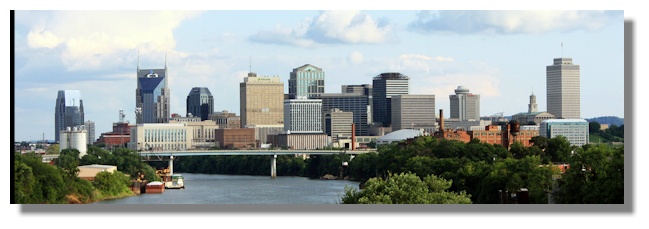
Nashville Skyline - graphic via Wikimedia
For comparability with other cities around the world, Greater Nashville has been defined as the entire urban area including and surrounding the City of Nashville. In addition to most of Davidson County, this area includes small sections of Cheatham County (the Ashland City-Gravelotte and Pegram-Kingston Springs areas) and the suburban sections of Williamson County (Fairview-Brentwood-Franklin-Nolensville area), Rutherford County (La Vergne-Smyrna area), Wilson County (Mount Juliet area) and Sumner County (Millersville-Hendersonville-Gallatin area).
Of the names of the 913 communities and neighbourhoods in Greater Nashville that have been identified to date, at least 62 (6.8%) appear to be based in whole or in part, on Scottish family names, or Scottish words, or on place names that are found only in Scotland and not elsewhere in the British Isles. There is the possibility that up to 21 further names could also have a Scottish connection, taking the total to around 83 names (9.1% of the total) but these names are also associated with other parts of the British Isles.
Communities, neighbourhoods, districts and outlying suburbs with names that occur only in Scotland and not elsewhere in the British Isles, and/or are definitely, or most probably, of Scottish origin are:
- Aberdeen Park - Aberdeen is Scotland's third largest city, having grown considerably in recent years through the discovery of oil in the North Sea.
- Barclay Drive and Barclay Square - there is a place called Barclay in South Ayrshire; also Barclayfield and Barclayhill in Perth & Kinross. However, there is a Barclay in Carmarthenshire, south Wales as well. As pointed out by Scarlett (1975) Barclay is a Lowland Scots name, "its bearers claiming descent from the Berkeleys who came to England with William the Conqueror." (p.37). This could account for the presence of the name in a part of Wales that was colonised simultaneously by the Normans. Of course, the Nashville neighbourhood of Barclay Square could also be a play on Berkeley Square in London.
- Bell Town and Bell's Bend - there is a small town called Bellstown in Dumfries & Galloway, off the M74 motorway between Gretna and Lockerbie. There are also many other places in Scotland with Bell as part of the name. The list includes: Bell Bay in North Ayrshire, Bell Craig in the Scottish Borders and in Dumfries & Galloway, Bell Hill in Borders, Bell Rock in Fife and South Ayrshire, Bell Sike in the Scottish Borders, Bell Stane in North Ayrshire, and Bell Wood in Aberdeenshire, to mention but a few. Place names starting with this Scottish family name are also found all over England, where the meaning of 'Bell' may perhaps be quite different from the meaning in Scotland. In the article on Bell Town, Tennessee retrieved from Wikipedia in August 2011, the following explanation is given: "Bell Town has traditionally been an African American community. Folk history has it that the traditional residents are descendants of the slaves of Middle Tennessee ironmaster Montgomery Bell; as Bell was widely reputed to have had several slave mistresses, many inhabitants claim descent from Bell via these women." Montgomery Bell (1769-1855), "The Iron Master of the Harpeth", was born in Pennsylvania of Scots-Irish stock.
- Bellwood - there is a village in Midlothian called Bellwood, the only occurrence of this name anywhere in the British Isles.
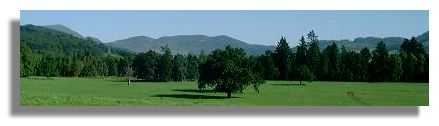
- Blair Heights - there are more than 200 places in Scotland with Blair as an element in the name including Blair itself in Aberdeenshire, East Ayrshire, Fife, North Ayrshire, South Ayrshire, South Lanarkshire and Stirling. Blair is derived from the Gaelic blàr (a woodland clearing or plain). It is also a common Scottish family name. The picture here is of the countryside near Blair Castle in Perthshire.
- Boyd Mill Estates - there are places called Boydston (South Ayrshire) and Boydstone (Renfrewshire) that are based on this Scottish surname, a name that was apparently derived from the Isle of Bute. The earliest record of Boyd as a family name in Scotland is in 1205 and a number of members of the family are known to have settled first in Ulster and later in the American colonies. This increases the probability that the name of the neighbourhood in the suburb of Franklin has a Scottish or Scots-Irish origin. However, some sources state that Boyd is also an English family name (of Norman origin). Places called Boyd can be found in the south west of England.
- Callie - there is a place called Callies in Aberdeenshire.
- Cameron Trimble - there are places called Cameron in Fife, North Lanarkshire and West Dunbartonshire. Cameron is an ancient Scottish family name, the origin of which has been speculated to mean either 'crooked (or wry) nose' (Gaelic) or 'curved hill-brow' (Old Welsh). According to the Dictionary of American Family Names, Trimble is a Scottish and Northern Irish variant of Trumble (an old Scottish and English name), recorded in Northern Ireland since the 17th century; as such it can be classified as a Scots-Irish name.
- Carlyle Place - Carlyle is the Scottish form of the English surname Carlisle. One of the most illustrious members of this family was the 19th century essayist, translator, historian and (often controversial) social commentator Thomas Carlyle.
- Craggie Hope - there is a small town in Highland, south of Inverness, called Craggie.
- Donelson and Donelson Hills - there are no places in Scotland with this name, but it may be a corrupted spelling of either of two Scottish surnames: Donnellson (associated with Clan MacDonnell) or Donaldson (a sept of Clan MacDonald). It is probable that the names of these neighbourhoods recall Colonel John Donelson (1718-1785), co-founder, with James Robertson, of Fort Nashborough in 1780.
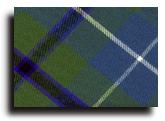
- Douglas (South Lanarkshire - the original territorial base of the powerful Douglas family - that's their tartan shown here; also a suburb of Dundee called Douglas and Angus and numerous other places in Scotland with Douglas as part of the name). Douglas is found in Ireland and on the Isle of Man as well, probably having been taken there by Scottish settlers.
- Duncan Wood - Duncan is an ancient Scottish family name. The Duncan clan is descended from the medieval earls of Atholl, the name being an anglicisation of Donnachadh, from Gaelic donn (brown) and cath (war), suggesting the meaning 'brown warrior'.
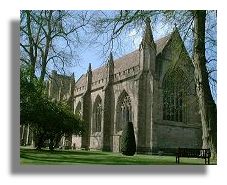
- Dunkeld Estates (Dunkeld in Perth & Kinross). According to the Penguin Dictionary of British Place Names (2003), Dunkeld means 'fort of the Caledonians', a reference to the Picts who once occupied this part of Scotland. The illustration shows Dunkeld Cathedral, Perthshire.
- Ewingville - there is a Ewingston in East Lothian based on the Scottish surname of Ewing. The name also occurs in two southern English counties, including Ewings in Devon, but Ewing is a Scottish family name from Argyll, its origin being Gaelic (Eógann, from the Latin Eugenius).
- Forrest Crossing - there are places called Forrest in Dumfries & Galloway and North Lanarkshire; also several other places in Scotland and one just over the border in Cumbria with Forrest as an element in the name. Forrest is a Scottish surname. One wonders whether Forrest Crossing was named for Brigadier General Nathan Bedford Forrest, the Confederate officer who led a column of men into Union-controlled Brentwood and whose ancestry was Scots-Irish.
- Glendale (Highland) and Glendale Park by association. A remarkably large number of American cities have communities/suburbs called Glendale, a name simply meaning 'valley'. The unusual feature of this name is that it is a tautology - 'valley' features twice, first in Gaelic (gleann) then in Norse (dalr).
- Glengarry (Aberdeenshire and Highland).
- Grandview Heights (Grandview in the Shetland Islands). Grandview was a popular name for neighbourhoods as well as streets in all English-speaking countries during the nineteenth and early twentieth centuries. In most instances, the name was applied to localities that literally afforded a wide panorama. In all probability, this was also the reason for naming the Nashville neighbourhood as well as the locality in Scotland.
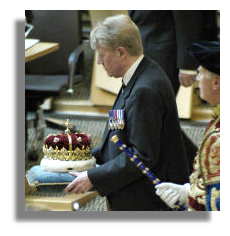
- Hamilton Chase - Hamilton is an important town in South Lanarkshire. The name Hamilton has been associated with Scotland since the thirteenth century, having been taken there by Walter Fitz Gilbert (Sir Walter de Hameldone). Hameldome/Hamelton was the name of Sir Walter's English estate in either Northumberland or Leicestershire. According to the Penguin Dictionary of British Place Names (2003), Hamilton in Old English means 'farmstead in broken country'. Hamilton is one of the most frequently recurring Scottish place names around the English-speaking world. Its popularity in the USA is largely attributable to Alexander Hamilton (c.1755-1804), advisor to George Washington and first secretary of the U.S. Treasury. Alexander Hamilton was born in Nevis, Leeward Islands, West Indies, the illegitimate son of a Scottish merchant (Thorne & Collocott, 1974). The graphic shows the Duke of Hamilton, the most senior duke in the Scottish Peerage (except for the Dukedom of Rothesay held by the Sovereign's eldest son) who carried the Scottish crown at the re-opening of the Scottish Parliament in 2004.
- Haysboro - there are places called Hayshead in Angus, Hayside in Scottish Borders, Haysmuir in East Ayrshire, Haystack in Fife, Hayside in Scottish Borders, Haysike in Scottish Borders, Hayston in Fife and East Dunbartonshire, Hayston Hill in Angus and Haystoun in Scottish Borders, some of which are probably based on the Scottish family name Hay. However, there are also many Hays in England, Ireland and Wales, the origins of which are unlikely to refer to the Scottish family name.
- Heatherwood Hills - there is a Heatherwood Park in Highland just north of Dornoch.
- Hendersonville - there is a Henderson's Rock in Argyll & Bute as well as a Henderson's House in Durham, England. Henderson (meaning 'Henry's son') is a Lowland Scottish family name. The Nashville suburb of Hendersonville was named for William Henderson, an early settler (Wikipedia article on Hendersonville, Tennessee, July 2011)
- Highland Acres, Highland Creek, Highland Heights, Highland Heights Acres and Highland View - names which possibly recall the Highlands of Scotland, though it should be noted that the name Highland can be found in most American cities suggesting that it is a name used for mainly descriptive purposes, denoting hilly or high terrain.
- Highview Acres - there is a village in Dumfries & Galloway called Highview but this could be pure coincidence.
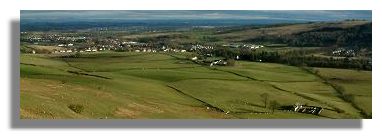
- Lennox Village - there is a Lennox Tower in the City of Edinburgh, Lennox Plunton in Dumfries & Galloway, Lennox Forest and Lennoxtown in East Dunbartonshire (pictured here) and Lennoxlove in East Lothian, all based on this Scottish surname.
- Lynn Christie - there is a Christielands in Dumfries & Galloway and a Christie's Hole in the Shetland Islands. This Scottish family name is also found just over the border, for example, Christies Bog in Northumberland and Christie Wood in North Yorkshire. Lynn is also an element that is often found in Scottish and English place names. Of course, Lynn and Christie in combination probably refer to a person's name in the case of this Greater Nashville community.
- Maxwell and Maxwell Place - there is a Maxwellheugh in the Scottish Borders, Maxwellbank, Maxwellfield and Maxwelltown in Dumfries & Galloway, Maxwell Park Station in Glasgow and Maxwellston Hill in South Ayrshire. The Maxwells, descended from Maccus, the son of a Saxon lord, became the wealthiest and most powerful family in Dumfriesshire and were depended upon, after the fall of the Black Douglases in the 15th century, to maintain law and order along the border with England. The name derives from a place called "Maccus's Wiel" (Old English 'wael' - a pool or whirlpool).
- McAndore Estates - possibly a corrupt, or Americanised, spelling of the Scottish surname of Macandeoir. It is also possible that McAndore may be a variant of McAndo, which is listed in Black (1996) as a Scottish surname.
- McGavock Farms - this neighbourhood in Brentwood was no doubt named for the McGavock family, early pioneers in the area.
- McKendree Village - The community of McKendree Village in Davidson County has a definite link with Scotland. The following account is provided in the village's official website: "McKendree Village was founded in 1963. It is named for Bishop William McKendree, the first American born Bishop of the Methodist Church, who served Tennessee. The name was officially changed to McKendree Village, Inc., on February 9, 1984, when we became a separate legal entity." (www.kendree.com/info-history.htm). The link with Scotland is evident in the article retrieved from Wikipedia in August 2011: "William McKendree (July 6, 1757 - March 5, 1835) was the fourth Bishop of the Methodist Episcopal Church, and the first Methodist bishop born in the United States. He was elected in 1808. William was born in King William County, Virginia, the son of John and Mary McKendree. His parents were both of Scottish ancestry……He died 5 March 1835 at the home of his brother, Dr. James McKendree, in Sumner County near Nashville." (Wikipedia article on William McKendree).
- McKissack Park -According to the Ancestry.com website, McKissack is a variant of McIsaac, a Scottish surname. The name may also be related to the Scottish surname Mackessack. According to the article on the surname McKissack, retrieved in August 2011 from Wikipedia, both the park and the Nashville neighbourhood were named in honour of Moses McKissack III, an American architect.
- Meadowgreen Acres - there is a place called Meadowgreen in Angus, the only occurrence of the name in the British Isles. It is far from certain, however, that the Franklin neighbourhood of Meadowgreen Acres necessarily took its name from that of the Scottish village.
- Melrose (Scottish Borders). Melrose has proven to be a popular name for neighbourhoods in many cities around the world, possibly because of its association with Sir Walter Scott whose residence, Abbotsford, is in the area.
- Moreland Farms - there is a Moreland in Perth & Kinross.
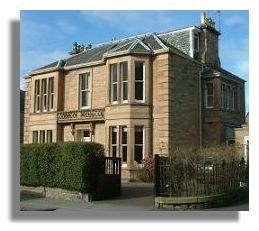
- Morningside Acres - there are several places in Scotland called Morningside (in Dumfries & Galloway, City of Edinburgh, North Lanarkshire and Perth & Kinross). Morningside seems to be a popular name for neighbourhoods in American cities. The illustration here shows a typical villa in Morningside, Edinburgh.
- Murray Estates, Murray Heights and Murray Lane Estates - Murray is one of the best known Scottish family names, derived from the name of the area (Moray) in which the Pictish founder of the clan was granted land. Examples of places in Scotland based on this name include Murray's Hill (Perth & Kinross), Murrayfield (Edinburgh) and Murraythwaite (Dumfries & Galloway) to mention but a few. The name has also travelled to England, e.g. Murray's Rock in Devon.
- Napier Area - According to the American Dictionary of Family Names, Napier is a Scottish family name derived from the occupation of a producer or seller of table linen.
- Ralston Glen - Ralston is a suburb of Paisley, Renfrewshire, on the main road between Glasgow and Paisley.
- Rosebank (Angus, Borders, City of Edinburgh, Dumfries & Galloway, East Dunbartonshire, Fife, Highland, Moray, Orkney Islands, South Lanarkshire and West Lothian). The name also occurs in the English county of Devon but is typically far more associated with Scotland than with England.
- Rosswood - there are places called Ross in the Scottish Borders, Dumfries & Galloway, Highland and Perth & Kinross plus many other places throughout Scotland that have Ross as part of the name. The same is true for England and Ireland, though less commonly so than for Scotland. Ross is of course a fairly common Scottish family name originating nearly 900 years ago from two very different sources: Yorkshire in northern England (the Ayrshire Ross's) and that part of the Highlands of Scotland once known as Ross-shire.
- Scottish Highlands - an obvious reference to the rugged, mountainous region that covers half of Scotland.
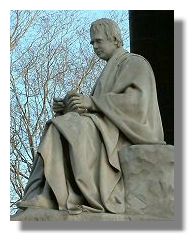
- Scottsboro - there are numerous places both in Scotland and England with Scott as an element in the name. Scotland's most famous Scott is of course the nineteenth century novelist and poet Sir Walter Scott - that's his statue in Princes Street, Edinburgh, shown here.
- Skyline Village - there is a Skyline Loch in Highland, the only occurrence of 'Skyline' as an element in place names anywhere in the British Isles. This does not necessarily guarantee however that the name of the Nashville community has a link with Scotland, as 'skyline' may be a purely descriptive term, popularly used in North America. Skyline Village is a suburban estate in the Bellshire area looking south toward the Nashville skyline, suggesting a purely descriptive reason for the name.
- Stewarts Ferry - there is a Stewarton in Argyll & Bute, Borders, East Ayrshire and Dumfries & Galloway plus numerous other place names throughout Scotland and parts of England and Northern Ireland that are based on the Scottish surname of Stewart. The Stewarts/Stuarts are descended from a Breton, Alan Fitzflaald, the crown of Scotland being brought to his descendants by Walter (1293-1326), fifth Steward of Scotland, whose son became King Robert II. The last of the Royal Stewarts was Queen Anne (1665-1714).
- Stuart Glen - Stuart is one of the most distinguished Scottish family names because of its association with royalty. The House of Stuart (or Stewart - see Stewarts Ferry above) reigned in Scotland for three and a half centuries (from 1371 to 1714) and for a hundred years in England between 1603 and 1714. One wonders whether the name of this neighbourhood, situated in Forest Glen, honours Confederate General J.E.B. Stuart, whose ancestry was Scots-Irish.
- Sutherland Heights - Sutherland was the name of a former county in the far north of Scotland, which had been named by the Norsemen living in the Orkney Islands since, from their perspective, the land lay to their south. The Scottish family name is derived from that of the former county.
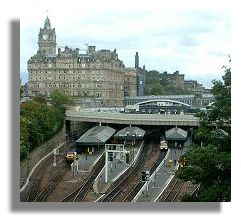
- Waverly Belmont - both elements of this place name are found in Scotland. Waverly is a popular name for neighbourhoods in American cities. It is an Americanised spelling of Waverley (the railway station in Edinburgh is illustrated here) and the title of Sir Walter Scott's first novel. Alternatively, it could refer to Waverley Abbey in England, from which Sir Walter Scott apparently borrowed the name. Belmont is found in the Scottish Borders, Shetland Islands and South Ayrshire, as well as in England, Ireland and Wales. Belmont was an extremely popular choice of name in all English-speaking countries during the nineteenth century, its origin being French ('beautiful mountain/hill').
- Whitebridge - the only occurrence of this name as a place name in the British Isles happens to be in the Scottish Highlands. This is no guarantee, of course, that the Nashville neighbourhood took its name from the Scottish village.
- Williamson Estates - there is a Williamson in Dumfries & Galloway. Williamson is a Scottish family name, the Williamson's being septs of Clans Gunn and MacKay. The name has travelled over the centuries to northern England, e.g. Williamson Bridge in North Yorkshire. Williamson Estates was no doubted named for Pennsylvania-born Hugh Williamson (1735-1819), after whom Williamson County was named.
- Woodlea Place - there are villages called Woodlea in East Lothian and in Dumfries & Galloway.
As in other cities around the world, not all of the above place names are necessarily based directly on their namesakes in Scotland. The connection with Scotland may be more indirect in some instances, for example, honouring individuals whose ancestry may have been Scottish. Examples where this may be the case would be gratefully received from readers in Nashville, for incorporation in future updates of this web page.
Some of the following neighbourhoods and suburbs could also prove, on further investigation, to have a link with Scotland. However, these names are also associated with other parts of the British Isles, or are based on family names that are not exclusively Scottish.
- Avondale (Shetland Islands; also Avondale House in Falkirk) but found in England and Ireland as well. There appear to be two communities with this name, one in Nashville City and the other in Hendersonville.
- Berry Hill (Aberdeenshire, East Lothian, Highland, North Ayrshire and Perth & Kinross) but found more frequently throughout England and is also found in Wales. In the article on Berry Hill, Tennessee, retrieved from Wikipedia in July 2011, the statement is made that much of the area of Berry Hill was originally owned by William Tyler Berry (died 1889) and his descendants. According to Ancestry.com, the family name Berry can be of English, Irish, Scottish, French or Swiss German origin, the Scottish form being a variant of the Scottish surname Barrie.
- Connell Estates and Connell Hills - According to the Ancestry.com website, Connell is a name that could be either Scottish (reduced form of McConnell) or Irish (reduced form of O'Connell).
- Cooks Corner - Cook is a Scottish as well as an English name. The Scottish Cooks are a sept of the Stewart clan; their ancestral lands were on the Isle of Bute.
- Denny Hills - there are places in Falkirk with the name Denny, Dennyloanhead and Denny Muir; also Dennystown in West Dunbartonshire. However, Denny as an element in place names is used even more frequently in England and also occurs in Monmouthshire, Wales. As a family name, Denny could be either Scottish or English.
- Glenview (Argyll & Bute). However, there is also a luxury hotel in County Wicklow, Ireland called Glenview, and other references to this descriptive name are also likely to be found in Ireland.
- Gower (a village west of Dingwall in Highland) though the large peninsula to the west of Swansea in south Wales is also called Gower. As a family name, Gower is most likely to be English or an Americanised spelling of the German surname Gauer. (Ancestry.com)
- Hunters Hill (Angus; also Aberdeenshire, spelt Hunter's Hill) but there is a Hunter's Hill in North Yorkshire as well.
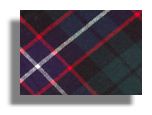
- Hunters Place, Hunters Ridge and Hunters Store - Hunter occurs in many place names throughout Scotland. The list includes Aberdeenshire (Hunter's Hill and Lodge), Angus (Hunter's Path and Hunters Hill), Argyll & Bute (Hunter's Quay), Scottish Borders (Hunter Hill and Huntershall), Dumfries & Galloway (Hunter House, Hunter's Gate, Hunterheck), East Ayrshire (Hunter's Meadow, Hunterston), North Ayrshire (Hunterston, Hunterston House, Hunterston Sands), Perth & Kinross (Hunterhall) and South Lanarkshire (Hunterlees). Hunter is found even more commonly throughout England but the surname Hunter is found frequently enough in Scotland for there to be a clan tartan - shown here.
- Jamestown (Aberdeenshire, Dumfries & Galloway, Fife, Highland and West Dunbartonshire) though also found in two Irish counties.
- Lamb - although Lamb on its own is only found within the British Isles as a place name in Scotland (in East Lothian to be precise), there are dozens of other references to places throughout both Scotland and England with Lamb as part of the name. The Scottish list is too numerous to quote fully. Examples include Lambhill (a district of Glasgow City), Lamb Bay, Head, Holm and Ness in the Orkney Islands, Lamb Craigs (hills in Dumfries & Galloway), Lamberton and Lambden (villages in the Scottish Borders), at least seven places called Lamb Hill and numerous others. The English list is even longer than the Scottish. Lamb is also a Scottish family name - one of the many variants of Lamont.
- Linton (Orkney Islands and Scottish Borders; also Linton Burnfoot and Linton Hill in the Scottish Borders, Linton Court in Fife, and Linton House in Aberdeenshire) but Linton is even more common in England than in Scotland. As a family name, Linton is considered to be both English and Scottish and was taken to Northern Ireland (Ancestry.com).
- McMurray - the MacMurrays are a sept of one of Scotland's best-known clans - Murray. On the other hand, McMurray is considered to be a Northern Irish name from the (Irish) Gaelic 'Muireadhach' meaning 'seafarer' (Ancestry.com).
- Miller Estates and Millersville - there is a Millerhill in Midlothian and Millerston in Glasgow plus numerous other places in Scotland with Miller as an element in the name, but this is also the case in England. As a family name, Miller could be either Scottish or English or (in America) an assimilation of a European surname, particular those of German or Dutch origin.
- Spence Lane - Spence is both a Scottish and an English family name derived from the Middle English spense (a larder or pantry).
- Sterling Oaks - possibly a corrupted spelling of Stirling in central Scotland. As an American family name, Sterling could be Scottish (a form of Stirling), English (a form of Starling) or German (from the nick-name Sterlinc). (Dictionary of American Family Names).
- Sunnyside (Aberdeenshire, City of Glasgow, Dumfries & Galloway, East Ayrshire, East Lothian, Fife, Perth & Kinross, North Ayrshire, Orkney Islands, Scottish Borders, South Lanarkshire) and Sunnyside Estates by association. Sunnyside is also found in England but not as commonly as in Scotland, which probably says something about the premium placed on sunshine in Scotland! Sunnyside has proved to be a popular place name in English-speaking countries, especially in the USA. There are in fact two places in the Nashville metropolitan area with this name (a Nashville neighbourhood and a community in Rutherford County). One wonders whether the popularity of this name is attributable to Washington Irving's home in Westchester County, New York, which is now a National Historic Landmark.
There is a long list of many other Nashville neighbourhoods and suburbs with names that can also be found in Scotland, but in their case the likelihood of a Scottish connection is greatly diminished because such names occur far more frequently in other parts of the British Isles, especially England. Examples include Bellevue, Green Hill, Greystone, Hermitage, Huntington, Sandhill and Trinity, to mention only a handful. Most of these names are of a general or descriptive character and none of them looks or sounds particularly Scottish.
It is interesting to note that of the names of the six counties over which Greater Nashville extends, two (Davidson and Williamson) are Scottish family names, another two (Rutherford and Wilson) have a high probability of also being Scottish and the remaining two (Cheatham and Sumner) are most probably English. This fact alone suggests that Scottish or Scots-Irish (i.e. Ulster Scots) influences were once very strong in the Nashville area.
Acknowledgements:
- Black, George F. (1996). The Surnames of Scotland. (Birlinn Ltd, Edinburgh).
- Scarlett, James D. (1975). The Tartans of the Scottish Clans. (Collins, Glasgow and London).
- Room, Adrian (2003). The Penguin Dictionary of British Place Names. (Penguin Books, London).
- Thorne, J.O. & Collocott, T.C. (Editors) (1974). Chambers Biographical Dictionary (Revised Edition). (W & R Chambers, Edinburgh).
- Ancestry.com
- Dictionary of American Family Names. Oxford University Press.
- Nashville City Map (Rand McNally, 2000).
- Google Maps, for the names of neighbourhoods within the City of Nashville.
- Mapquest.com for the names of outlying commuter ('bedroom') communities.
- Websites, placename gazetteers and published Ordnance Survey maps of British and Irish cities, towns, villages and counties.
© Ian Kendall
If you wish to contact Ian about his research, his e-mail address is ian.kendall1@bigpond.com.
Melbourne, Australia, April 2005
Revised October 2011



