Scotland Awash Thanks to Alex
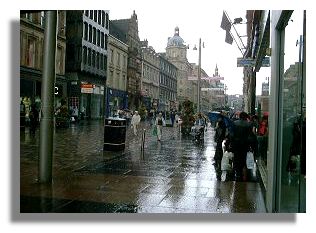 Last summer, the weather was hitting the headlines as temperatures soared to record levels and Scotland basked in days and weeks of sunshine. Once again, the weather is making the headlines in newspapers and TV this week. But this time it was the continuous, torrential rain, thunder and lightning, flooding and landslips which became the focus. As all sorts of experts were paraded to explain the weather, we learned that it was being caused by the remnants of Hurricane Alex, which had battered the eastern seaboard of the US the previous week. But the pattern of high and low pressures in western Europe meant that it came to a screeching halt over Britain - and dumped a lot of the water it had picked up during its journey across the Atlantic. Some of the "highlights" of this week were:
- Over seven inches of rain fell on Glasgow Monday and Friday, flooding some roads as the storm drains failed to cope.
- a car with a family of five on holiday in Perthshire had a lucky escape when their car became trapped by a landslide of mud, rocks and trees on the A9 Perth to Inverness road. They had to crawl out of the windows as the weight of mud meant they could not open the doors.The mud and rock closed this main artery for several days. Drivers trying to travel between Perth and Inverness were sent on huge diversions via Aberdeen.
- The Ayr to Glasgow railway line was disrupted on Monday following problems with overhead power cables.
- a number of roads in Renfrewshire, North Lanarkshire and Inverclyde were closed on Monday.
- Southern Scotland was initially the worst hit with 2.5in (66mm) of rain in the 24 hours up to Tuesday evening.
- a march by pipers in Glasgow to promote the Edinburgh Military Tattoo was abandoned because of heavy rain.
- flood warnings were issued for the river Tummel downstream of Pitlochry, the River Tay from Kenmore to the A9 road bridge, the River Earn from Downstream of Crieff, Ettrick Water and Teviot Water.
- In Edinburgh, residents were marooned when earth and two trees from nearby woodland collapsed into Daiches Braes, trapping more than 60 people in their homes.
- Shetland and parts of the west coast escaped the rain and basked in sunshine. Aultbea in Wester Ross had the highest temperature in the UK on Tuesday, when it reached 27C.
- while Scotland dried out a bit at the end of the week, we watched with concern Hurricane Charley devastating Florida and realised that it hadn't been so bad here after all....
School Exam Pass Rates Rise
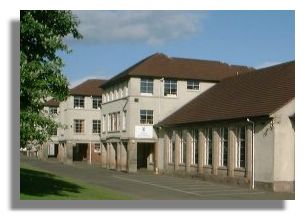 For the secondary school pupils who sat their Standard and Higher grade exams a few months ago, the anxious wait for the results ended this week as the envelopes from the Scottish Qualifications Authority came through the letter boxes. There were more squeals of delight than last year, however, as pass rates improved in most subjects. The Higher English pass rate is 64%, up 4.8% on last year, the Higher maths pass rate is 67.8%, up 1% and the percentage of Standard Grade entries receiving a grade 1-6 increased from 96.8% to 97.2%. An analysis of the results shows that 55% of the passes were achieved by girls and only 45% by boys, an all-time high for the gender gap.
When pass rates go down, the media starts a witch hunt on "falling standards" and when they go up, there are claims that the exams are getting easier. So Education Minister Peter Peacock stressed "We have maintained tough and high standards in our exam system which is the envy of many countries and we are seeing performance year-on-year moving in the right direction." While he claimed this was due to political support (he would, wouldn't he?) he also acknowledged the hard work by pupils, teachers and parents. Across Scotland, 142,082 candidates received certificates this week, up by 2,026 from last year. In the most recent PISA (Programme for International Student Assessment) report, Scotland performed well against other countries in the three areas of reading, maths and science.
Economic Growth Accelerates
The Royal Bank of Scotland's Purchasing Managers' Index (PMI), which is based in data from 570 companies in the private sector, showed a rise in the output index from 55.0 in June to 56.1 in July - only marginally down on the four-year high of 56.3 recorded in April. Although the figures looked good, Scotland was nevertheless third-bottom of the 12 UK regions covered by the report, with only the West Midlands and north-east of England below. On the other hand, the employment index for Scotland jumped from 52.6 in June to 53.3 in July, which ranked Scotland fourth from the top in the league of UK regions on this measure. The bank's economists suggest that Scotland has not been hit so hard as some areas by surging oil and metal prices as there is a greater reliance on information technology and electronic sectors. According to the PMI report, output in manufacturing has now grown for 13 consecutive months.
Million Passengers at Glasgow Airport in July
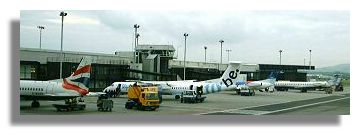
Living under the flight path to Glasgow airport, I have been conscious of the greater number of flights passing over. So when the official figures for passenger numbers in July were published, it was no real surprise to read that they had broken another record. Traffic increased by 9.9%, reaching over one million passengers in a month for the first time. But although Glasgow is still Scotland's busiest airport, Edinburgh is catching up fast. The capital's airport handled nearly 800,000 customers, an increase of 10.2% on last year. On a rolling 12-month basis, Glasgow has seen 8.3 million passengers in the last year. The summer months are the busiest at Glasgow, due to the large number of chartered aircraft taking holidaymakers to the sunshine. Glasgow Airport's second terminal - T2 - has helped boost the airport's capacity this summer and a recent report showed that Glasgow had the shortest delays of any major UK airport.
Five Fishermen Rescued from Sinking Trawler
Emergency teams from the Alba oil field helped in the rescue of the crew of a sinking trawler in the North Sea on Thursday. The trawler Chrisamie sent out a distress call which was picked up by coastguards at Aberdeen, who then co-ordinated the rescue. Three of the crew were helped off the stricken craft while the skipper and mate tried to pump out sea water. But two hours later it became clear that the ship was going to sink and they had to hastily transfer to the rescue boat. All the crew were taken to the nearby oil platform.
Scotsman Goes Compact

It used to be that newspapers regarded as "quality" were published in broadsheet size and the "popular" papers were in the smaller tabloid format. But after the London Times successfully launched what they called a "compact" version (a tabloid in all but name), other broadsheets have been dipping their toe in the same water. The Scotsman newspaper, published in Edinburgh, brought in their own compact version, on Saturdays only, five months ago. Sales of that edition have grown between 7 and 18 percent and from next week it will introduce the smaller page size every day of the week. The Scotsman points out that when it was first published (on Saturday, 25 January 1817 to coincide with the anniversary of Robert Burns' birth) it was printed in "compact" form. Its masthead of a thistle (carried to this day) was to signify that the paper would carry a "sting". The Aberdeen-based Press and Journal (the "voice of the north"), not noted for innovation, launched a compact Saturday version a few weeks ago. Which leaves the Glasgow-based Herald standing aloof.
Editor's Note: There are no plans for the quality "Scottish Snippets" to downsize....
4,000 Jobs Saved
Aero engine company Rolls-Royce has abandoned plans to move its repair business to Eastern Europe and instead will create a new £45 million factory at East Kilbride, south of Glasgow. The Czech Republic had offered a tempting package of government financial aid, but the skills of the workers employed at East Kilbride (and £8 million of public money from the Scottish Executive) convinced Rolls Royce that they should stay in the same town. They decided that the skills involved in stripping down an engine and rebuilding it were not transferable. Rolls Royce have had a plant there since 1953 and employ 1,000 staff, with a further 3,000 supply jobs in supporting industries.
World Pipe Band Championships
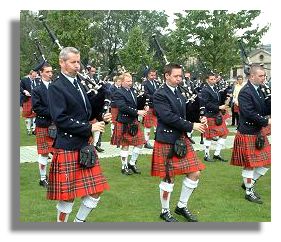 Glasgow came alive to the sound of Scotland this week and particularly on Saturday, when the World Pipe Band Championships brought the pipes and drums of 8,000 musicians in over 230 bands to Glasgow Green. This is the 19th consecutive year it has been staged in Glasgow and this year it seemed a bit better organised from the point of the 40,000 spectators. In addition to the pipe band championships, Highland dancing and Drum Major competitions, the European Highland Games Heavy Events Championship was held at the same time. Traditional events such as stone putt, throwing the Scots hammer and tossing the caber entertained the crowd. After all the rain this week, it was a relief to enjoy a warm, dry afternoon with the sun making a fleeting appearance every now and then. In the Grade 1 World Pipe Band Championships, Field Marshal Montgomery Pipe Band of Northern Ireland (pictured here, tuning up before their performance) took first place, followed by Simon Fraser University (Canada). Third place went to last year's winners, House of Edgar Shotts & Dykehead while Strathclyde Police were 4th. See Piper and Drummer for the full results.
Six New Wildlife Havens for "Dear Green Place"
Glasgow, with its reputation as a "dear, green place" already has two local nature reserves (LNR), areas of outstanding natural interest and biodiversity. Now the City Council has announced plans to create six more. These designated areas will be protected and managed both to provide opportunities for research and for recreational space. The proposed sites are at Garscadden Wood in Drumchapel, Waulkmill Glen and Darnley Mill in the south side, woodland at Cardowan Moss in the north-east, Frankfield Loch in Garthamlock, Robroyston Park near Robroyston and an extension to Bishop Loch in Garthamlock. Hogganfield Park, an existing LNR, recently won a prestigious award.
RAF Fly to Rescue Wind Farm
 The Ministry of Defence have withdrawn their objections to a £200 million windfarm development at Harestanes in the Forest of Ae, north of Dumfries, after Scottish Power created a computer generated simulator of flying fast jets and helicopters in the low-flying training area. The RAF pilots who tested the simulator gave the plan a thumbs up, resulting in the MoD change of heart. But the RAF want 23 of the 94 turbines moved closer to the town of Moffat and residents in the picturesque town are not going to like that. The project requires planning permission from Dumfries and Galloway Council. The Harestanes turbines have the potential to meet around a third of the Scottish Executive target to produce 18% of electricity from renewable resources by 2010. The site is said to be the best in Scotland for wind farm development and each 125 metres high turbine will generate three megawatts of power. Scottish Power now plans to use the computer simulator to persuade the RAF and the MoD about other sites where they have objections. The illustration here shows an RAF Tornado flying low over the windfarm in the Lammermuir Hills in the Scottish Borders.
No Chicks for Northern Seabirds
In recent years, there has been a worrying decline in the number of sandeels, a slender silvery fish which is rich in oil. These are a major food source for birds nesting in Orkney and Shetland and other areas of the North Sea off Scotland. But this year, they were nearly non-existent. The result has been that the birds which would normally produce thousands of chicks have produced hardly any. There is a population of 7,000 pairs of great skua on Shetland and they have produced only a handful of chicks and the same problem has arisen with 24,000 pairs of arctic terns and 16,000 pairs of kittiwakes. It is being suggested that global warming is dramatically reducing the number of sandeels in the North Sea, where average temperatures have increased by 2C over the past 20 years. Of course, industrial fishing of sandeels has become big business too, with an annual quota of a million tons resulting in more sandeels being caught than any other fish. They are processed into meal and oil for livestock, farmed salmon and soft margarine. In an effort to help the seabirds, waters around the south of Shetland have been closed to fishing this summer, with reduced catches in northern Shetland waters. The number of seabird chicks hatched next year will show whether the strategy is working.
Salmon Rivers Report Bonanza Catches
 Scotland's four largest salmon rivers (Spey, Dee, Tay and Tweed) are reporting their best catching figures for nearly 20 years. The Tweed has had its best catches so far this year since 1985 with 2,465 rod-caught salmon in the first five months of the 2004 season. In 2003, the Tweed's total catch was 13,886 for the year, the highest since records began in 1963. However, the four major salmon rivers operate a "catch and release" policy - after landing the fish, anglers return it to the river to ensure fish survive to spawn for the future. Consequently, there could be a bit of "double counting" with some fish being caught more than once.
Nuclear Power Station to Go Green
The oldest nuclear power station in Scotland, at Chapelcross near Annan in Dumfries and Galloway, is to be turned into a mixed coal and wood-burning electricity generator. The wood would be fast growing willow, cultivated in a three-year cycle in UK forests. Eventually, the plant would be burning just willow and although this creates carbon-monoxide gas, the growing trees will absorb an equivalent amount from the atmosphere. If the system is as successful as the planners hope, it will produce more electricity than the elderly nuclear reactors which are being decommissioned. There are another six nuclear reactors which could follow the same route. By using turbines and other plant already there, costs are kept to a minimum and as they would be using renewable "biomass" they would help the UK to reach its target of producing 10% of its electricity by 2010 from renewable resources.
Protection for Salmon Industry
 The European Union has at last agreed to introduce a tariff on salmon imports above a specific volume, in order to protect the Scottish and Irish commercial salmon farmers from cheap imports. For many years, there have been complaints that the Norwegians (who are outside the EU) have been flooding the market with fish at below the cost of production, assisted by massive government subsidies. The move has come too late, however, for six companies in Scotland that have gone into administration/receivership in the past 12 months, the most recent within the past few weeks. The EU has also decided that Scottish farmed salmon should be awarded a new "protected" status. This means only fish produced here can be labelled Scottish.
Dodger and Fudgy Reunited With Parents
Forestry Commission Scotland raced against the clock to rescue two osprey chicks when their nest was blown down during the storms and heavy rain this week. The chicks were dazed after their fall of 40 feet to the ground. The nest is linked by video to a nearby forest visitor centre, however, so the rangers were quickly on the spot. They worked in pouring rain to build a new nest before the parents - long-term osprey visitors named Dodger and Fudgy - gave up looking for their chicks. Once the chicks were back in the new nest, the parents came back and began feeding them again. Clearly none the worse for their ordeal, one of the chicks even celebrated by flying for the first time a few days later.
Improved Service? You Must Be Joking!
 Over the years, customer service centres have been a major growth industry in Scotland - apparently the Scottish accents are well regarded by callers from all parts of the UK. The professional staff may not live up to the company advertising blurbs which claimed that they "improve customer service", but they do try their best. An example of this is Scottish Gas, where the management wanted to add a smile to the voices of their 1,800 staff to make the customer experience even better. So they are using giant screens, normally used to send company messages, to display jokes to turn on a hi-tech "laughing-gas" (from Scottish Gas, remember) to create a positive atmosphere. Unfortunately, the company has provided some examples of the jokes they are using - such as "My husband and I were happy for 20 years. Then we met". And "You know, somebody actually complimented me on my driving today. They left a little note on my windscreen; it said 'Parking Fine'. So that was nice."
Sponsorship for Scotland's (Nearly) Worst Football Team
 East Stirlingshire finished last year's soccer season (like the season before) at the foot of the Third Division. They just managed to avoid the record of the lowest number of points in the league's history with a last gasp victory, allowing them to earn 8 points - but with 118 goals scored against them during the 36 games. Now their luck has turned and Littlewoods, the football pools company, has come along and awarded the team a six-figure sponsorship deal. This is the first time Littlewoods has invested directly in a football team during its 80 year history. The company say they wanted to help a club that needed a change of fortune and East Stirlingshire have had more than their fair share of bad luck. The players earn just £10 a match and the manager works for nothing. Not that the sponsorship will change much of that, but at least the team will have new shirts and there will be bonuses for the players - if they win. That element shouldn't cost Littlewoods too much money, though.
Is There a Vogts Tartan?
The Scotland football team manager, German-born Berti Vogts, turned up as the invited honorary "chieftain" at the Bridge of Allan Highland Games last weekend wearing a pin-stiped suit. He opened the games and handed out the prizes, watched by an audience of around 10,000 in an arena which has the Wallace Monument as a back-drop. He was the first foreigner to be asked to be the chieftain for the day - previous holders of the office have included Scottish football legends such as Richard Gough and Ally McCoist. When he was asked why he was not wearing a kilt (who on earth expected him to wear one?) he replied "When we qualify and we go to Germany for the World Cup, then I will take the kilt with me." Officials at the Scottish Football Association are perhaps even now trying to figure out what tartan Berti Vogts would wear - as if Scotland haven't a big enough problem already trying to qualify in the first place.
Weather in Scotland This Week
 Rain and more rain was the pattern for much of the week - as the first item above described in some detail. And last weekend had been so warm and sunny too, with Edinburgh reaching 26C (79F) on Sunday and Eskdalemuir in Dumfries and Galloway, often one of the wettest places in Scotland, recording over 22 hours of sunshine over Saturday/Sunday. Then the heavens opened on Sunday evening. Glasgow's seven inches of rain between Monday and Friday finally stopped on Friday afternoon and there was even some watery sunshine. The weather outlook for next week? Continuing changeable, of course...
This week's illustrations of current flora and fauna in Scotland were in short supply because of the poor weather. But there was some sunshine on Friday and that is when these pictures were all taken. The perennial red Lobelia on the right and the bright, sunny Inula were snapped in my own garden. The Large White and Small Copper butterflies were spotted in the countryside north of Glasgow.


|

The Scottish Snippets Newsletter in its original format began in April 1997 and continued in an unbroken series for 591 issues. Although no longer produced in that format there is now a regular update on the new and updated pages on the Rampant Scotland site and also "Scottie's Diary" on an intermittent basis, To receive this, kust send an e-mail to Scottie with "Subscribe Newsletter" in the subject line.
 Historical Affairs - Topical Items from Scotland's Past



 Although other parts of Edinburgh Castle have been available for hire for wedding ceremonies, Historic Scotland have only recently allowed historic St Margaret's Chapel to be used for such events by other than military personnel. The first record of the castle being used as a royal residence occurs in the 11th century when Margaret, wife of Malcolm III died there, after hearing of her husband's death at the Battle of Alnwick in 1093. The small chapel which bears her name was probably not built until the 12th century (by King David I, Margaret's son). It is the oldest surviving structure in the castle. It stopped being used as a chapel in the 16th century but it was restored to its present condition in 1845. It can take only 25 guests, though other areas of the castle are available for day and evening receptions.
 Tourism agency VisitScotland has awarded a five-star rating as an historic attraction to Dryburgh Abbey in the Scottish Borders. Built on a bend of the river Tweed, the first sight of the ruins of the abbey is through a curtain of trees. While more of the abbeys at Melrose and Jedburgh have survived, Dryburgh has much to offer and its tranquil, serene setting makes it a most attractive place to visit. But it was as much for the professional and informative staff as well as the conservation that Dryburgh gained its accolade. Dryburgh is the burial place of Sir Walter Scott and Field Marshall Earl Haig. Unlike the ostentatious Scott memorial, Hag's grave is the simple marble gravestone of the type which marks the last resting place of so many of those who died in the battlefields of France during the 1914-18 war. See
 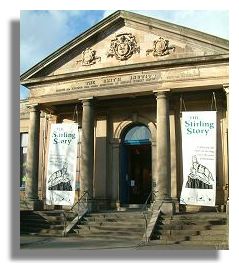 The Stirling Smith Art Gallery and Museum opened for the first time 130 years ago. That event was so significant for the town that shops closed at noon so that the townsfolk could enjoy the special holiday. 800 guests turned up that day and the anniversary was marked by Friends of the Smith. The planned garden party in Ailie's Garden at the rear of the art gallery was somewhat affected by the weather and there weren't quite as many guests as the original opening, but it did mean that Stirling (now a city) once more put the spotlight on their vibrant collection of art and antiquities. The Smith contains the world’s oldest football (1540), the world’s oldest curling stone (1511) and a host of memorabilia relating to William Wallace who won his famous victory at Stirling Bridge in 1297.
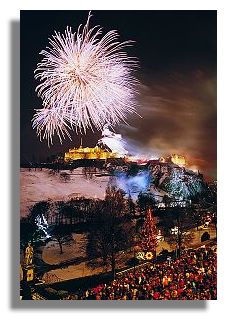 Until now, tickets for the Hogmanay Street Party in Edinburgh's Princes Street have been free. But now Edinburgh City Council have announced that they will make a charge of £2.50 for the first time. They say that it will help to cover the cost of printing and distributing the passes. It will also reduce the number of people who order tickets and then don't go to the New Year's eve event. The passes for 31 December 2004 will be available on a first come, first served basis from 2nd October.
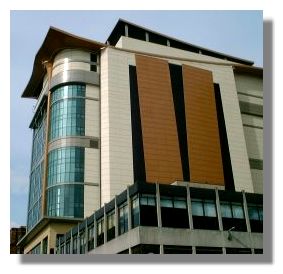 The 18-screen UGC cinema in Glasgow, which opened less than three years ago, is to have emergency repairs to its cladding. Claimed to be the tallest cinema in the world and holding the record as the busiest in the UK, with 1.8 million patrons last year, the building has a total of 4,227 seats. The skyscraper was awarded the title of Scotland's "Carbuncle of the Year" as the ugliest building in Scotland - even before it had opened. The repairs to the facade on the 14th storey of the building will mean that surrounding roads will have to be closed overnight on two occasions this month. But it will be "business as usual" inside the cinema on the days when the repairs are carried out.
 The first casino in Scotland was opened in 1964 in Glasgow by the restaurant owner Reo Stakis. He went on to create a chain of 22 casinos across the UK and eventually sold them for £1.2 billion. But even he would be surprised by the plans for building casinos in Scotland's largest city which could create "Glasvegas". Currently there are five casinos in Glasgow, but these will be dwarfed by developments in the pipeline. A new facility is opening in September in a three-story, 30,000-sq-ft state-of-the-art building. But if the gaming laws in the UK are updated as expected, a casino will be a major element in a £562 million expansion of the Scottish Exhibition and Conference Centre. It will have 1,200 staff. Then there is a proposed "complete day and night-time experience" included in the Glasgow Harbour development further along the river Clyde, promoted by MGM Mirage, which owns three major casinos on the Strip in Las Vegas. All of which will rather put in the shade the casino envisaged by Rangers Football Club at Ibrox. While no doubt some local Glaswegians will be attracted by the bright lights and the thrill of losing money at the gaming tables and slot machines, these large projects will be dependent, like Las Vegas, on attracting lots and lots of visitors.
 Celtic are back at the top of the Scottish Premier League, with full points from both their games. Rangers are in second place with 4 points, thanks to a superior goal difference over Hearts who also have 4 points. At the foot of the SPL, Inverness, Motherwell and Dundee have yet to score any points.
 An away goal by Nacho Novo gave Rangers a lifeline after the first leg of their Champions League qualifying match against CSKA Moscow. The Russian side scored after only four minutes and again, shortly after the start of the second half. Both goals were down to defensive lapses by the Ibrox side
 Two goals down after 20 minutes, Dunfermline fought back in the second half to score two valuable away goals in their UEFA Cup Qualifying Round 2, first leg. While a draw against a team of Icelandic part-timers is not wonderful, Dunfermline will have home advantage in the second leg. And the Dunfermline fans will not have the sort of travel problems they experienced on the first leg. The charter plane booked to take 140 of them from Edinburgh to Iceland failed to turn up. Iceland's national airline Icelandair offered to take 77 of them on its flight from Glasgow and after selecting the fans by drawing lots, they dashed 50 miles along the M8 to Glasgow airport. Eventually, the remaining fans took off at 5.30pm in another charter flight and arrived in time for the 9pm kick-off.
 Scotland's international football team got a boost this week when it was announced that skipper Barry Ferguson would be back in the team for the friendly against Hungary at Hampden Park on Wednesday. Ferguson has been recovering from a broken kneecap injury. He last played for Scotland in November last year in the defeat by the Netherlands. Andy Gray and Paul Dickov have also been named in the squad and teenage Celtic goalkeeper David Marshall steps up from the Under-21 squad.
 The deadline for entries to the Great Scottish Run has been extended to the day before the event because the number of applicants has been so high. 13,000 runners are expected to start on Glasgow Green on August 22, running in half marathon and 10k routes, with a 3k junior race. It is estimated that £28 million has been raised for charity since the Great Scottish Run began in 1982.