Holyrood Parliament - Gigantic Failure or Work of Genius?
 The enquiry into the escalating costs and delays in the project to create the new Scottish Parliament building at Holyrood in Edinburgh heard the closing arguments of the legal teams this week before closing down to allow Lord Fraser to consider the evidence and produce his report later this year. The project was condemned for suffering "a management failure of gigantic proportions" with civil servants, politicians and the construction managers among those to be blamed. But others defended the building, saying that it was a "work of genius" by the architect Enrico Miralles, who died in the early years of the project after creating the initial groundwork. Some architectural experts agree that it is a magnificent building, a "thrilling masterpiece, full of surprise and invention" said one. Which may mean that the ordinary tax-payer will not think much of it.
Holyrood Goes Up in Smoke

Well, not quite. The new £431 million parliament building did catch fire last weekend and a column of black smoke rose from a pile of polystyrene insulation foam. This was beside a concrete blast wall, below the "contemplation bubble" windows of the offices which will be occupied later this year by the Scottish Members of Parliament. The blaze was put out by security staff before the fire brigade arrived, but there were scorch marks and soot on the concrete wall. The building is due to open in September - three years behind the original target date.
Reductions in Patient Waiting Times
Billions of additional tax-payers money is being poured into the National Health Service (NHS) but sometimes it is hard to see any improvements as it takes so long for the investment to produce results. The Scottish Executive has created a number of numerical targets for the NHS which has resulted in additional administrative effort which sometimes takes attention away from aspects which do not respond to number-crunching. But according to their latest statistics on measuring the longest waiting times for hospital treatment, some progress is being made. All inpatient/day case patients with a guarantee were treated within nine months (with one exception, which was due to a clerical error) and numbers waiting more than six months fell sharply, down to 5,729, the lowest figure recorded and around half the number (10,882) two years ago. The government claims that the reality is that if you need urgent NHS treatment, you will get it right away. More than half of hospital patients are treated immediately and never join a list. And of those who do, half are seen within one month and nearly three quarters within three months. But critics say that the "median waiting time" has become longer; ministers claim that is a statistical anomaly due to the very long waiting times of the past being removed. You can prove anything with statistics...
Green Light for Windfarms
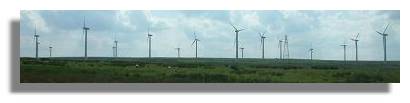
A government minister has said that the planning system needs to be changed to allow the introduction of windfarms more quickly, so that the country can reap the benefits of renewable energy projects. The comments by the deputy minister for enterprise were met with concern by environmental campaigners who want the use of fossil fuels reduced, but are also worried about the impact of hundreds of wind turbines across the landscape. The minister is keen to see local councils take on more staff so that applications can be dealt with more swiftly, even if central government has to pay for the extra salary bill.
Bullet Proposed for Glasgow to Edinburgh Service
Chris Green, the former head of Scotrail and now chief executive of Virgin Trains, has voiced backing for a non-stop "bullet train" service between Edinburgh and Glasgow. This would cut the journey times between Scotland's two largest cities from 48 minutes to 30 minutes. Despite the obstacles to such a project, he is confident that it will be implemented "in his lifetime." He says he is amazed that the line between the two cities has not been electrified and continues to run diesel trains. When he was in charge of Scotrail in the 1980s, he made a number of changes to the track to allow for the introduction of electrification of the line. But after his departure, the new management electrified the longer route between Glasgow Central Station and Waverley, which is used mainly by travellers from and to intermediate stations, rather than anyone commuting between the two cities. These days, trains leave and arrive at Waverley and Queen Street every 15 minutes, but journey times are no shorter than in the 1980s. Chris Green is the chief executive of the company which has introduced the new 125mph tilting "Pendelino" trains on the long distance service between London and Glasgow, so he knows a thing or two about new rail technology. So the many travellers between Edinburgh and Glasgow will be hoping that whoever operates the Scotrail service in the future is willing to "bite the bullet" as he has suggested.
Truck Drivers Plan Go-Slow Fuel Protest
 The Road Haulage Association has announced plans for about 400 vehicles to stage a go-slow in the streets of Edinburgh on 15 June as a protest at the government's decision to go ahead with an additional 1.92p a litre fuel duty in September, despite prices reaching a 13-year high. They fear that prices will rise still further from the current 82p a litre in central Scotland, to over 90p a litre. Petrol stations in the less densely populated parts of the Highlands are already experiencing petrol prices approaching that level. The action by commercial truck dtivers has brought back the spectre of the previous fuel protests at oil terminals which resulted in petrol supplies to the pumps down to a trickle.
Biggest Ever Maritime Training Exercise
Ships and submarines from 16 countries and marines posing as suicide bombers will take part in the largest maritime training exercise ever staged in the UK. It is taking place from June 21 to July 1, off the west coast of Scotland. Activities are scheduled from the Hebrides in the north-west to Galloway in the south-west. Naval commanders will learn how to defend themselves against simulated attacks by "terrorists" in fast patrol boats. The exercise will involve an aircraft carrier, frigates, destroyers, mine countermeasures vessels, submarines and fast patrol boats as well as helicopters and fighter and maritime patrol aircraft. Armed forces from the UK, US, Turkey, Poland, Holland, Sweden, Germany, France, Spain, Denmark, Norway, Belgium, Portugal, New Zealand, Canada and Australia will take part.
Encouragement for Farmed Salmon
 The Scottish Executive and Scottish Quality Salmon are to jointly fund a £3 million advertising campaign to encourage Scots to eat farmed salmon. Spurious health concerns published in recent months have resulted in a decline in consumption, despite the well proven health benefits of eating oily fish. Salmon has become a more affordable option for many consumers in recent decades due to the fish farming industry. The aim of the advertising is to boost consumer confidence and help to maintain a valuable source of employment in some of the most remote and rural communities in Scotland.
Power Station Sold to India?
Inverkip power station on the Clyde coast of Inverclyde has lain dormant since the 1980s. The oil-fired plant is now uneconomic to run at current oil price, but the tall chimney of the power station is a well-known landmark on the coast. Now it appears that ScottishPower is in discussion with an energy company in India which could see the plant dismantled and taken to India. The building houses three turbines and transformers and a £300 million package could see the plant being transported to Gujarat. Environmentalists have criticised the plan as it would mean exporting equipment which produces high levels of pollution and greenhouse gases. Inverkip was Scotland's first oil-fired power station, but it rarely generated to its capacity of 2000mw of energy because of the rising price of oil.
Pollen Count Certificates for Pupils
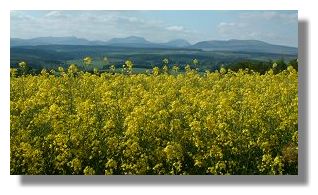 Experts have warned that Scotland faces a record level of pollen in the coming months as a result of global warming and the increase in the areas planted with oil seed - its yellow flowers produce a large amount of pollen which badly affects hay fever sufferers. This coincides with the time of year when school pupils are sitting Higher and Standard Grade examinations and grades in these can dictate the future careers of students. Now the National Pollen Research Centre is to offer school pupils certified pollen counts for the days they are sitting exams. Combined with a note from a doctor, confirming that they do suffer from hay fever, this may help their chances of getting a below expected result upgraded. Teenagers are more affected than any other section of the population and constant sneezing, bleary itch eyes and fuzzy heads are common symptoms. Readings so far this year suggest that the pollen season will be longer and more severe than in previous years. A recent reading registered four times the level normally regarded as "high".
Glasgow Makes French Connection
The citizens of St Galmier, near St Étienne in central France, were so impressed by the behaviour of the Scottish fans attending the 1998 Football World Cup, that they started to support the Scotland national side. They maybe haven't had too much to cheer about since then, but that didn't stop them setting up a Scottish Week in the town - complete with pipe bands and imported Irn-Bru, McEwan's Lager and even haggis. The rekindling of the Auld Alliance has not been one-sided though. Last weekend the Lord Provost of Glasgow, Liz Cameron, welcomed a delegation from St Galmier. They were given a civic reception, a tour of the Trossachs and attended the Scottish Cup Final at Hampden Park. Members of the Scotland Tartan Army (the supporters who attend international matches) were also on hand to provide help and advice.
Scotland's First Gaelic Secondary School
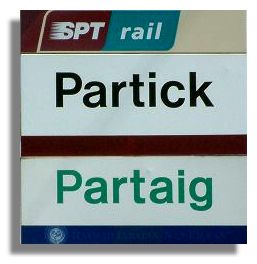 At a time when the number of Gaelic speakers in Scotland has never been lower, the first secondary (12 to 18 age group) school dedicated to the language is to be opened in Glasgow. It will use the unoccupied former Woodside School, in the west end of the city, and is expected to take its first pupils in the 2005/6 school year. The Education Minister described the move as "the most significant step forward in Gaelic education for 20 years." Initially, it will have pupils in the pre-school and 5-14 age range, but will expand to become a full six-year secondary school. In the last census, 58,000 Gaelic speakers were recorded out of a population of just over 5 million in Scotland. The Scottish Executive will provide £2.75 million of the £3.5 million capital costs and the City of Glasgow Council is expected to fund the remainder. The illustration shows a dual language sign at Partick Railway station in Glasgow.
Tide Turns for More Scottish Beaches
The Marine Conservation Society, which carries out an annual survey of the cleanliness of beaches around the UK, has awarded a record number of Scottish locations top marks in their Good Beach Guide. A total of 56 beaches won top honours, compared to 33 in the previous year. While the better performance owes much to major investment by Scottish Water in sewage treatment plants, the exceptionally dry weather last year reduced the amount of run-off from farms, lowering the level of contamination. The east coast came off best in the survey, with 13 beaches in Fife gaining top marks. Only Culzean and Troon South on the Firth of Clyde reached the top level. But with new water treatment plants coming on-stream, it is hoped that Helensburgh, Largs and other Clydeside resorts will reach the highest standards soon. Four years ago, Troon failed to even meet the minimum European Union standards for clean sea water; now it is in the "excellent" category.
Pride o' the Clyde Rescued by Refuse Boat

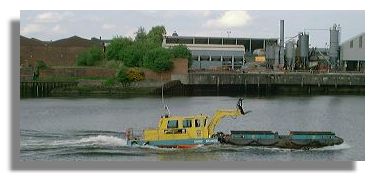
The riverboat "Pride o' the Clyde" provides a service between the centre of Glasgow and the Braehead Shopping Centre five miles downriver. It is used mainly by tourists who want to see what the historic riverbank looks like these days. There are also a few who use it to commute to and from Renfrew and Braehead, avoiding the busy roads. But on Wednesday passengers were left stranded, due to a technical problem on the boat as it sailed down river. Help was at hand, however. The St Mungo, which plies up and down the Clyde collecting debris (a kind of river road-sweeper) came to its aid. The little boat nudged alongside and towed the Pride o' the Clyde safely to the pier at Braehead. Despite being a dull day, the boat had a large number of passengers on board and they all safely disembarked. But anyone who had intended to take the riverboat back on the return trip, had to trudge off dejectedly for a bus. A notice appeared at the pier shortly afterwards, saying sailings had been cancelled due to "tecnical problems" (their spelling, not mine). Meantime the little rescue boat, duty done, chugged off up the river to continue its refuse collection (see below).
National Walk to School Week
Schoolchildren and their parents across Scotland were encouraged to leave the car at home and walk to school instead this week. This is the ninth year of the campaign to encourage youngsters and their parents to get more exercise and use the car less. According to the Department of Transport, 18% of cars on the road in urban areas at 8.50am, the peak traffic congestion time, are taking children to school. There is another surge when schools close at the end of the day. Despite the campaign, the percentage of pupils travelling to school by car has doubled from 16% to 30% over the last ten years.
Leader of Clan Cameron Dies
 93-year-old Colonel Sir Donald Hamish Cameron of Lochiel, the 26th chief and captain of Clan Cameron died peacefully at the clan's spiritual headquarters of Achnacarry Castle, near Fort William. He is survived by his wife, four children, 14 grandchildren and four great grandchildren. Sir Donald, who was known simply as Lochiel, was made a Knight of the Thistle by the Queen in 1973. He was commissioned into the Lovat Scouts in 1929 and served with them during WW2, rising to the rank of major. He was Lord Lieutenant of Inverness-shire from 1971-85.
Vettriano Paintings Exceed Estimate
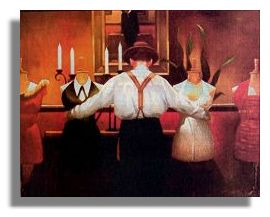 After the sale of the Jack Vettriano's best-known work "The Singing Butler" last month for a record-breaking £744,800, art experts found it difficult to estimate what other paintings by Scotland's most popular living artist would fetch. There was always a danger that there might be a fall-off in interest. So there was surprise in the art world this week when 12 oil paintings by the artist, which had been estimated to fetch about £500,000 at an auction, actually sold for a total of £773,000. The sale included Mad Dogs, which fetched £140,000, compared to its estimated value of between £40,000 and £60,000. It looks as though all the media publicity about the artist has helped to raise his profile. Vettriano (born in 1954) worked in the Fife coalfields before turning to art and had no formal training. His prints sell to the public in greater numbers than most classical artists. Over a million prints of the "Singing Butler" have been sold around the world. The illustration shows Vettriano's painting entitled "A Kind of Loving".
Drivers Asked to Install Splatometers
The Royal Society for the Protection of Birds (RSPB) has asked for volunteers to fix a "splatometer" on the number-plates of their cars. It's not to count the number of pedestrians splatted, but the number of insects which hit them during a typical journey of between 20 and 80 miles. The splatometer is not exactly hi-tech - just a grid which sticks to the number plate. Drivers have to physically count the number of insect bodies on the splatometer. The aim is to measure the insect population across the UK and in Scotland there is a particular interest in the number of midges, the mosquito-related little terror that blights many a Scottish hillside in summer. There is anecdotal evidence that the number of midges is getting less. While that is good news for humans, it is bad news for the birds such as swallows, martins and wagtails that feed on them - and that is what the RSPB is concerned about. Motorists taking part in the Big Bug Count which runs throughout June will be providing an insight which will help to identify the areas of the country with the highest level of insects.
When you Go Down in the Woods Today....
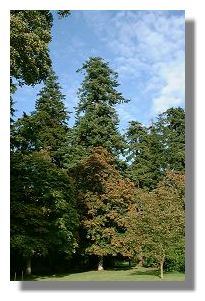 The largest ever survey into the public use of Scotland's national forests - and what they expect from such areas - gets under way next month. Following a pilot survey in Inverness-shire, and feedback received during the recent national review of land managed by Forestry Commission Scotland, researchers will be out and about in forests right across Scotland counting the numbers entering the woods and also seeking the views of local people and visitors. It is the first time ever that the entire national forest estate, including the more remote woodlands, is to be covered by the three-year survey, as previously only high-usage sites were monitored. The results will help Forestry Commission Scotland, together with local people and other partners, determine where and how they invest in forest recreation and services for years ahead.
Aberdeenshire Cow Produces 167 Pints in One Day
No, this is not a story about penny-pinching Aberdonians, but no doubt the managing director of Mackies Dairy in Aberdeenshire is counting the profits from his record-breaking Holstein named Prelude Felicity. The nine-year-old regularly produces 120 pints a day, but recently smashed the record for the most milk from a cow in a day - which was held by the same cow - with 167 pints. The milk goes to make Mackies Ice Cream and thanks to Felicity and her colleagues efforts they are producing more milk than is needed at this cool time of the year. The over-production is being put down to the conditions in which the 500 heifers are kept on the farm at Rothienorman. They have rubber mattresses to lie on and even special cow pillows to make them as comfortable as possible when being milked. The robotic milking technology also plays its part. This allows Felicity to be milked six times a day.
Weather in Scotland This Week
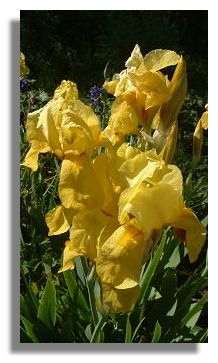 There was lots of sunshine last weekend, with Edinburgh recording over 30 hours of sun over the two days and temperatures reaching a pleasant 18C (64F). But as the winds shifted to the north again, maximum daily temperatures fell to 14C (57F) in Edinburgh on Wednesday and a chilly 12C (54F) in Aberdeen. But the sun was much in evidence again on Wednesday and Thursday - Aberdeen recorded 14.8 hours on Thursday. By Friday, most areas were overcast and cloudy with some light showers passing through. This lasted through much of Saturday but gradually the clouds rolled away. The weather outlook for the next few days is for warmer, drier weather, particularly in the west, with temperatures rising to 20C (68F).
This week's illustrations of current flowers in Scotland show first of all a yellow iris growing in the walled garden of Cambo Estate near St Andrews in Fife. The illustrations below are first of all a group of azaleas growing at Ross Priory on the banks of Loch Lomond. Although the gardens are private, they were open to the public last Sunday as part of the "Scotland's Gardens Scheme". The pale yellow mecanopsis at Glenarn near Rhu makes a pleasant change than the more usual ice blue. Finally, the red paeony was also at Ross Priory.



|

The Scottish Snippets Newsletter in its original format began in April 1997 and continued in an unbroken series for 591 issues. Although no longer produced in that format there is now a regular update on the new and updated pages on the Rampant Scotland site and also "Scottie's Diary" on an intermittent basis, To receive this, kust send an e-mail to Scottie with "Subscribe Newsletter" in the subject line.
 Historical Affairs - Topical Items from Scotland's Past



 Glasgow-born artist Douglas Gordon, who won a Turner prize for his video art work, has been awarded a £100,000 scholarship from the Edinburgh College of Art to produce a film based on Rosslyn Chapel in Midlothian, south of Edinburgh. Now based in New York, Gordon has been inspired by the 15th century chapel which was founded by Sir William St Clair. The chapel took 40 years to build and was originally planned to be part of an even larger building. Sir William drew the design of the chapel and the ornate carvings on timber boards, which the masons then copied. It is the amazingly intricate carvings, both inside and out, which make Rosslyn so unique. With associations with the Knights Templar, various claims have been made about the chapel, including that it houses the Holy Grail or the Ark of the Covenant in a sealed crypt. Carving of what looks like maize is said to support the legend that Sir William's heir, Prince Henry, reached North America 100 years before Columbus. Douglas Gordon plans to make a film which explores the history - and the myths - of the building.
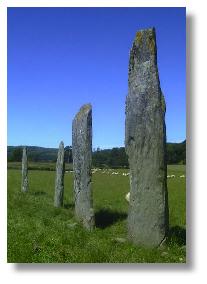 Kilmartin is in the centre of the rich heritage of Dalriada, the ancient kingdom of the Scots in what is now Argyll. The Irish tribe came over from Ireland and settled there - and eventually gave their name to Scotland. Fort Dunadd, a few miles from Kilmartin, was their capital and the region is full of standing stones, cairns and burial mounds going back to Neolithic times. The Kilmartin Museum won the Scottish Museum of the Year Award in 1998 for making history accessible. A book to be published later this year on Britain's best museums, was to have listed Kilmartin as a site of national importance. But the museum, with its unique collection of artefacts from the area, could close in September because of lack of finance. It depends heavily on the local council and Argyll and Bute spends just 66p per head of population for museum provision - compared with £21 in Glasgow and a national average of £8 per head. The museum attracts 30,000 visitors a year, which is good for a location away from the main centres of population. Kilmartin is not alone in facing financial problems - the Livingstone Centre in Blantyre had to be helped out by the National Trust for Scotland and ad hoc grants are needed to keep the Maritime Museum at Irvine afloat.
  Despite protests from Historic Scotland and city culture experts, Glasgow City Council has allowed a building used as offices by architect Alexander "Greek" Thomson to be demolished. They said that the historic building had been neglected for years and had become unsafe. The four-storey building dates back to the 1820s, and sits at the corner of West Regent Street and Wellington Street. The building was remodeled internally by Thomson during the time he was working in Glasgow, creating his distinctive buildings based on the styles of ancient Greece. Historic Scotland, the Architectural Heritage Society of Scotland and others have fought for the retention of the 'A'-listed building for many years.
  129 pipe bands from around the world competed in the Royal Scottish Pipe Band Association Championship in the shadow of Dumbarton Castle last weekend. It was the Field Marshall Montgomery band from Northern Ireland which won the top prize in Grade 1. House of Edgar Shotts and Dykehead, who won the World Championship last year, were second and Boghall and Caledonia were third. The illustration shows members of the Field Marshall Montgomery Pipe Band warming up prior to thw World Championships last August.
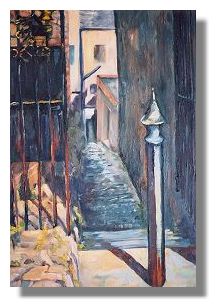 The Stirling Smith Art Gallery and Museum is showing a selection of paintings by artist Sheena Wilkie who, though she was born and grew up in Stirling, now lives in the south of England. Sheena is now a highly respected painter, and a few years ago she began a regular pilgrimage back to the place of her childhood - Stirling. This pilgrimage has been her inspiration to record people, places, and events in paint. The exhibition includes several works which recall her early experiences - such as her fear as a child of using the 'Sma' Vennel' (seen here) as a shortcut and the time her younger sister got her head stuck in the railings of the Holy Trinity Episcopal School! 'Unbuckled', the title of the exhibition, refers to the saying that Stirling is the buckle which joins the Highlands and Lowlands together. The exhibition is at Stirling Smith Art Gallery and Museum until 4 July 2004. Admission is free.
 Darren Fletcher, a 20-year-old mid-fielder, became the Scotland football team's youngest ever captain when he led the team out against Estonia in another friendly match this week. In the previous week, he had helped his club, Manchester United, win the English FA Cup and he continued his winning ways with Scotland. The national side scraped a 1-0 win over the Baltic side with a goal from James McFadden after a great solo run. Of course, Estonia are even lower than Scotland in the world football rankings, but Scottish supporters are grateful for any win these days. It avoided a fifth consecutive defeat and with the next match against Trinidad and Tobago the team may even perform a minor miracle and have two consecutive wins. As on many other occasions, there were a large number of call-offs from experienced players for the match against Estonia, with only six players certain to be in the starting line-up against Slovenia, when the World Cup qualifying campaign starts on 8 September.
  Willie Miller, who captained Aberdeen Football Club to European Cup Winners' Cup glory in 1983, has returned to the club as a full-time paid director. Some fans welcomed him back as a saviour. He was dismissed as a manager of the club in 1995 and although he has been out of football management since then, his media work has kept him as a high profile figure in the game. He wrote about the club's problems in his weekly column in the Aberdeen Press and Journal a few weeks ago and was invited to join the board by the club chairman Stewart Milne who said he wanted "fresh ideas". Miller immediately set about demonstrating these by sacking manager Steve Paterson, assistant manager Duncan Shearer and coach Oshor Williams. The team had won only 24 of 68 games under their stewardship and finished this season in second bottom place in the SPL. To be fair, financial strictures forced Patterson to sell all the club's experienced players and put out a team of youngsters to fill their shoes. Miller replaced Paterson with Dunfermline manager Jimmy Calderwood. Calderwood improved Dunfermline every year during his four years in charge of the club, gaining promotion from the First Division within five months of being put in charge, and climaxing this year in the club's first appearance in the Scottish Cup Final since 1968. Whether he can perform another miracle in Aberdeen remains to be seen - there is no new money in the kitty.
 When Bobby Williamson departed from Hibernian Football Club five weeks ago, sports writers speculated on his replacement and a number of candidates emerged as "front runners". So there was some astonishment when the club announced that their new manager was Tony Mowbray, former coach of English Premier League side Ipswich. Nobody had anticipated the appointment of a man who had a distinguished playing career captaining both Middlesbrough and Celtic but no managerial experience. He was appointed full-time coach at Ipswich after the club had won promotion to the English Premier and worked under two managers there. Joe Royle, the current Ipswich manager gave Mowbray a glowing reference. Mowbray says that an entertaining brand of football will encourage fans to support Hibs. Winning a few more games than this year might help too - the club finished 8th in the SPL this season. His appointment is being viewed with a degree of caution by some fans.
 On Saturday 5 and Sunday 6 June 2004, over 400 world class riders from more than 35 countries, together with more than 15,000 spectators, will descend upon the idyllic highland setting of Fort William to take part in the third round of The UCI (International Cycle Union) Mountain Bike World Cup, the most prestigious and the most extreme competition in the world's mountain biking calendar. BBC Sport Scotland has commissioned two 50-minute programmes covering all the action and will be televised on Sunday 6 and Monday 7 June 2004 on BBC2. Both programmes can also be viewed outside the BBC Scotland area by anyone with Sky Dsat (BSkyB Platform).