Explosion at Plastics Factory Kills Nine
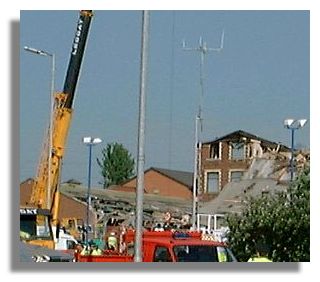 A massive explosion at a four-storey plastics factory in Glasgow's Maryhill district on Tuesday, resulted in the death of nine people and serious injuries to another 18 survivors with many others allowed home after treatment for cuts and bruises. About 60 people were working in the building when the explosion occurred and the building collapsed. One 34-year-old office worker who was killed had been due to leave the company at the end of the week after 15 years service. Office staff who were working above the site of the explosion figured largely amongst the dead and injured, including the company's manager. The cause of the accident at the Stockline Plastics factory is not known, but the focus of attention of an official investigation is likely to be the industrial ovens.
  For three days and nights, hundreds of firemen and rescue workers, some from around the UK as well as Strathclyde, toiled relentlessly to try to reach a victim buried under piles of precarious rubble. Knocking sounds had been heard on the day after the explosion and the factory management had established that one man was still missing. But when they reached him on Friday, 72 hours after the blast, he was found to be dead. Emergency workers were praised for their professionalism as they put into practice their contingency plans for a major disaster which seemed to work very efficiently. As they tried to reach the last victim in the rubble, they used a combination of hi-tech equipment and sniffer dogs to pin-point where he was located. But it was a call to his mobile phone which, although there was no answer, helped to pinpoint where he was lying. For three days and nights, hundreds of firemen and rescue workers, some from around the UK as well as Strathclyde, toiled relentlessly to try to reach a victim buried under piles of precarious rubble. Knocking sounds had been heard on the day after the explosion and the factory management had established that one man was still missing. But when they reached him on Friday, 72 hours after the blast, he was found to be dead. Emergency workers were praised for their professionalism as they put into practice their contingency plans for a major disaster which seemed to work very efficiently. As they tried to reach the last victim in the rubble, they used a combination of hi-tech equipment and sniffer dogs to pin-point where he was located. But it was a call to his mobile phone which, although there was no answer, helped to pinpoint where he was lying.
Transparent Scotrail Bids
 The Scottish Executive is said to be considering publishing the details of the bids to operate the rail network in Scotland and provide the reasons for their decision. Three companies (National Express which currently holds the franchise, Arriva and FirstGroup) have lodged their final proposals and a decision is expected later this month. The three companies have said that publication would be a matter for the Executive, although they would not want some commercial confidential details released. British transport groups operating in North America, are used to the freedom of information act there which requires full transparency.
Jobless Figures Lowest Since 1975
Unemployment in the UK fell to 4.7% (5.7% in Scotland) in the three months to March, based on the internationally recognised ILO method of calculation. This was the country's lowest level of unemployment since 1975. The number of people claiming unemployment benefit also fell, to 2.7%. But with job vacancies rising, there is increasing upward pressure on wage rates. Average earnings rose by 5.2% in the three months to March, according to Office of National Statistics figures. Excluding bonuses, the increase was 3.9%.
Oil Rig Safety Changes- Improvement or Detrimental?
 The oil company BP is to go ahead with major changes to the way in which offshore search, rescue and recovery operations in the North Sea are managed. Instead of having a number of vessels operating close to the North Sea oil rigs, there will be four new rescue ships and three helicopters plus a new platform-based radar system . The company claims that the new system, which has been approved by the Health and Safety Executive, will be an improvement on the existing system. But the shipping union, Numast, has criticised the plan, saying that it ignored the lessons learned after Piper Alpha disaster in 1988 when 167 lives were lost following an explosion. For decades, standby vessels have operated around the rigs, ready to pick up anyone who falls into the sea and to warn off any other vessels which might get too close. Now there will be "regional support vessels" carrying specialised independent rescue and recovery ships and fast rescue craft. One helicopter will be based in the central North Sea area and another at Scatsta in Shetland. The project was dubbed "Jigsaw" during the planning stages but the union claims that there are "missing pieces" as they say the new system would not be able to cope with a mass evacuation from an oil rig.
Edinburgh Tries to Lure Selfridges to Capital
Glasgow's gloom that the 200,000 sq ft Selfridges department store in the city's Trongate might not get built after a change of heart by the company, deepened still further this week. Edinburgh City Centre Management, a development company which is supported by the city council and local businesses, said it was trying to attract Selfridges to the capital. St Andrew Square was being earmarked for such a prestigious department store. Selfridges announced its plans to move to open in Glasgow in January 2001 and a site was identified in December 2002 in an area which is not part of the current main retail area. But after a change of ownership, Selfridges reviewed all its development plans and so far no planning application has been lodged in Glasgow.
Labour Leader Remembered
 A memorial service was held on the island of Iona last Sunday, marking the tenth anniversary of the death of the former leader of the Labour Party, John Smith. The Chancellor of the Exchequer, Gordon Brown, the deputy prime minister, John Prescott and the former NATO secretary-general Lord Robertson, joined members of the Smith family to remember the man who was described as "the best prime minister Britain never had." Mr Smith died on May 12, 1994 aged 55, after suffering a heart attack. He was buried on Iona, a place he loved dearly. Tony Blair became party leader after Smith.
The illustration shows a memorial gate to John Smith at Glasgow University where he graduated.
Decline in Number of Young People in Highlands
Projections on the changing population in the Highlands by the General Register Office predict that the number of young people living in the Highlands will fall by 50% by 2015. The figures were discussed at a "population summit" this week in Inverness which also heard that the overall population in the Highlands will fall from 208,000 to under 200,000 on 2018. The 4% drop compares badly even with the figures for the whole country which suggest a decline of 2.18%. Of course, there are a number of regional variations - Inverness can expect an increase in population of 2.9% (to 68,528) by 2017 but Sutherland will see a drop of 17.2%. In the Highlands, as younger people move to the more heavily populated parts of Scotland or the UK to find work, older people are moving in to the area to retire, creating an even greater imbalance in the age profile of the population.
£50 Million Plan for Loch Lomond Holiday Village

A major project was approved this week which will create a holiday village of 76 lodges and 18 apartments plus a golf course on a 300 acre site on the banks of Loch Lomond in the heart of Scotland's first national park. It will be next door to the exclusive Loch Lomond Golf Club and Cameron House, but its golf course will be available for use by the paying public. Opposition to the plan has diminished after the developers agreed to drop plans for a hotel and to create a nature reserve on 100 acres of the site. The Midross Estate is currently derelict and includes a series of gravel pits, so the regeneration of the site has been welcomed by the tourism agencies. The chalets will be largely invisible from the main tourist route.
Seville Targets Glaswegian Tourists
The Spanish town of Seville hosted last year's UEFA Cup final. Because the 80,000 Celtic fans who descended on Andalucian capital made such a favourable impression, with their exemplary behaviour (and beneficial impact on the local economy), the mayor of Seville has come to Glasgow to launch a major tourist drive to encourage Glaswegians to return. Even though Celtic lost 3-2, fans continued to party with the locals and opposing Porto supporters long into the night. Their behaviour won them the Fair Play award from European football's governing body and the sport's world governing body FIFA. The local Spaniards say they were impressed by the way the Scots were able to drink all day but always display good-natured fun.
Petrol Prices Rise Again
 The last time petrol (gas in some parts of the world) reached over 80 pence a litre in the UK, there were mass protests at oil terminals and supplies to forecourts were disrupted. But as prices drift up to that level again, due to a combination of international oil prices (the highest since the war in Kuwait in 1990) and government taxation, there is an air of resignation amongst drivers of cars and trucks. But there is anger that the price rises are being made worse by the government petrol tax. The UK already has one of the highest prices for petrol in Europe, thanks to a fiscal regime that has steadily increased government duty over a long period. Last year, the price went up by another 2p a litre due to another tax hike and later this year the price tax goes up by another 1.92p a litre. When that increase was announced, the Chancellor of the Exchequer said that it would only apply to the current variety of fuel, to encourage the introduction of a new sulphur-free petrol. But the oil companies say that the new-style fuel will not be generally available for another year - so the Chancellor will gain another billion pounds of tax. Road hauliers in Scotland say that they are planning to launch another fuel protest, similar to the one four years ago which saw tankers unable to leave refineries, resulting in a shortage of fuel at the pumps. Garages in the north of Scotland charge the highest prices in the country, due mainly to low turnover.
Motorists Pay Edinburgh City Council £16 Million
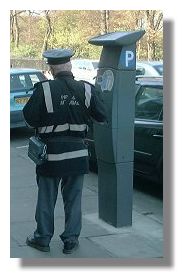 The amount paid by motorists in Edinburgh on parking meters, fines and residential parking permits each year has nearly doubled from £8.24 million in 1998/9 to £15.85 million in 2002/3. The biggest increase has been in fines collected by the "Enforcers" which has shot up to £7.5 million last year from £1.6 million five years earlier. There are 5,500 pay-and-display meters across Edinburgh. The city council says that the extra cash has been used to fund a long overdue road and pavement repair programme over the next three years. The council is still debating whether to introduce a toll on cars and lorries entering the city.
Hallelujah - Booze Buying Before Sunday Lunch?
Laws controlling the sale of alcohol in Scotland have come a long way since the days when only "bona fide travellers" could buy a drink in a hotel on a Sunday (the only place to buy an alcoholic drink on the Sabbath). But the licensing laws still prohibit the sale of booze in supermarkets between midnight and noon on a Sunday. Scots who push a supermarket trolley on Sunday instead of sitting on a pew in church, are confronted by the shelves containing wines and spirits cordoned off. But a review of the legislation earlier this year recommended the lifting of this restriction and Scottish Executive ministers are reported to be "relaxed" about such a reform. While there would be a majority support from the public on such a change, the Free Church of Scotland has condemned the relaxation as "riding roughshod over the traditional observance of the Sabbath."
Plans for Scotland's Biggest Casino
 Gaming giant London Clubs International has secured planning permission for a new casino development costing £8 million at Glasgow's Springfield Quay, on the south bank of the river Clyde. The new venue could be open in two years time and will be located alongside a cinema, bingo hall, 10-pin bowling alley and restaurants. A new footbridge planned for the area will provide easy access to the city centre. Glasgow already has five of Scotland's 12 casinos.
Scottish Coat of Arms for US Secretary of State
 Colin Powell, the four-star general who is now the United States Secretary of State, has petitioned the Heraldry Society of Scotland for a coat of arms to link him to his Scots ancestry. He traces his Scottish roots back through his mother's side of the family. Symbols incorporated into the design will include the head of an American bald eagle and four stars. The motto reads "Devoted to Public Service". Powell is understood to have been advised on the procedure for obtaining a coat of arms by his US army colleague General Jack Nicholson (whose ancestors came from Arran). It is likely that the Lord Lyon, who is the Queen's representative responsible for all heraldic matters in Scotland will personally travel to Washington to present documentation.
New Air Route to Philadelphia Begins
US Airways new direct flight from Glasgow to Philadelphia began operating on Tuesday. The troubled airline is trying to avoid bankruptcy but claims that the new service will be profitable from the outset despite the intense competition which is developing on the trans-Atlantic route from Scotland. Continental, which already operates a Glasgow/New York service, is launching an Edinburgh/New York direct flight next month. American Airlines flies to Chicago from Glasgow and Continental and flybe operate direct to Newark, New Jersey. Zoom operate direct services from Glasgow to a number of Canadian destinations. And Icelandair's aircraft fly from Glasgow to North America, via Reykjavik.
Tam the Gun Looks Fjord to Future
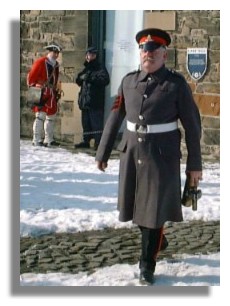 A gun has fired at exactly 1pm at Edinburgh Castle since 1861. But for the last 25 years Staff Sergeant Thomas McKay (also known affectionately as Tam the Gun) has created a theatrical performance for visitors to the castle as he fires the howitzer with military precision. But this weekend he is in Bergen in Norway - to marry his sweetheart whom he met when he showed her round the castle. The couple later got engaged in Bergen after Tam befriended a group of Norwegians who were visiting Edinburgh for the Tattoo last year. Tam has become something of a celebrity in Norway and his marriage is being covered by Norwegian TV. Before he is married in the 800-year-old church in the town, he will fire Bergen's own gun at 2pm - to coincide with the One o'Clock Gun being fired in Edinburgh. He will wear a kilt in the Black Watch tartan and his bride, Joyce Mills, will arrive at the church in a horse-drawn coach.
Campbeltown Community Project
European funding of £1.5 million has been awarded to help Argyll and Bute Council provide an all-purpose leisure facility at Kinloch Park in Campbeltown. The project, which will see the building of a swimming pool, library, fitness suite and crèche, is worth around £6.5 million when matching funding is included. The finance comes from the Highlands and Islands Special Transitional Programme which was approved by the European Commission in August 2000. It has supported projects that contribute to the economic development of the area totalling 300 million Euros (£208 million) for the period 2000/2006.
Wanted - Dead or Alive
 No breeding colony of the Colorado Beetle, which attacks potatoes growing in the fields, has been found in the UK since 1976. But growers, gardeners, importers, traders and consumers are being recruited as deputies to track down this voracious vegetarian pest from the wild west of America, dead or alive.They are not native to Scotland but have previously come into the country during spring and summer on imported goods such as leafy vegetables, potatoes, fruit, grain, seeds and timber. The adult beetle is about 10mm in length, resembles a large ladybird in shape and has 10 black stripes running down a yellowish back. Colorado beetle larvae can be mistaken for pupae of the ladybird, which are similar in shape and colour but do not move.
Supreme Highland Games
The Sarnia-Point Edward region hugs the St. Clair River where it joins Lake Huron, across from Port Huron, Michigan. The city of Sarnia will be holding its 21st Highland Games on August 19th to 21st this year and on the Thursday a Country and Western Group known as the Waite Brothers Jamboree will be playing at the Dow People Place Bandstand at Centennial Park from 7/9pm. The hosts are the clan McIntosh and members of the clan will be meeting there as usual. For more information, contact firstlady@xcelco.on.ca.
Green Future for Westray
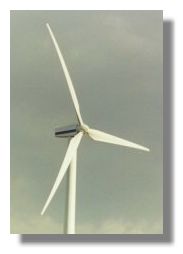 Proposals have been drawn up which will make the island of Westray in Orkney the first community in Britain entirely self-sufficient in renewable energy production by 2012. All the buildings on the island will be powered by wind, wave or solar energy and all the vehicles on the remote island will run on hydrogen. A grant has already been received by the community for an electric minibus using power supplied by wind turbines. If the full government-sponsored scheme is successful, it could be rolled out to other rural communities across the UK. The island has a population of 560 and the plans include a power plant fuelled by animal slurry which will produce methane gas. Another idea being pursued by the Agronomy Institute in Orkney is to grow rapeseed and sugar beet on the island for use by local boats and ferries. Similar projects are being drawn up by other islands around Scotland, including Unst, Jura and Coll.
Weather in Scotland This Week
 Glasgow reached 22C (72F) on Monday and was one of the warmest spots in the UK that day, enjoying also 10.6 hours of sunshine. But heavy storm clouds arrived in the late afternoon and floods and electric storms brought the sunshine to a rapid end. The violent downpour created flash floods and resulted in some stranded cars in Rutherglen. For the rest of the week, the maximum daytime temperature reached at least 16C (61F) in Glasgow, which is above average for May. On the north-east coast, however, Aberdeen only reached 12C (54F) on Wednesday. The outlook for the next 3/4 days looks promising with a fair amount of sunshine forecast.
This week's illustrations of current flowers in Scotland show first of all an early rose flowering in the National Trust for Scotland garden at Geilston House in Argyll. The illustrations below are also from Geilston - an azalea close-up and a general view of part of the garden with another azalea in the foreground. The photographs were all taken on Monday - when the sun shone and temperatures reached the low 70s.


|

The Scottish Snippets Newsletter in its original format began in April 1997 and continued in an unbroken series for 591 issues. Although no longer produced in that format there is now a regular update on the new and updated pages on the Rampant Scotland site and also "Scottie's Diary" on an intermittent basis, To receive this, kust send an e-mail to Scottie with "Subscribe Newsletter" in the subject line.
 Historical Affairs - Topical Items from Scotland's Past



 The £2.3 million project to restore Linlithgow's Burgh Hall to its former glory has hit a problem - nobody knows what the interior of the building looked like before badly conceived radical alterations were implemented in the 1960s. It is known that there was a grandiose medieval staircase, but there are no illustrations of the interior dating back to the mid 1800s. The building was first created between 1668 and 1670 to replace an original Town House which had been destroyed by Oliver Cromwell's army in 1650. It was restored in 1847 after a fire and a clock was added to the tower in 1858, while the sweeping front double stair was added in 1906. The architects have appealed to local residents for any early photographs or drawings of the building dating back to the 19th century. It will take some time to draw up the plans and put the funding in place (including the inevitable application to the Heritage Lottery Fund) so work will not get underway until 2006.
 The footprints left by a dinosaur which walked on mudflats 170 million years ago, which are now part of the Trotternish Peninsula of the west coast of Skye, have been identified by paleontology experts as a ceolophysis. This flesh-eating velociraptor was similar to the one featured in the film "Jurassic Park". It hunted in packs and was built for speed. It was one-and-a-half metres tall, but was moving slowly when it made the prints. A number of dinosaur discoveries have been made on Skye in recent years, including a dinosaur print surrounded by the fossils of ten young.
 After nearly a year of speculation, Scottish TV has confirmed that it is to move from its premises in the centre of Glasgow to a new media centre development at Pacific Quay. It will join BBC Scotland to create a hive of media production companies in the waterfront location. STV's new premises will house 350 staff and state-of-the-art studios and transmission facilities.
 A special programme of free street entertainment is being arranged at the National Galleries of Scotland at The Mound area of the capital as part of the Edinburgh Festival Fringe this August. The events are being organised to tie in with the completion of the Playfair Project which sees the expansion of the gallery space with an area under the gallery being opened up to look out over Princes Street Gardens. The area has been out of commission since 2000 because of the building works but used to stage jugglers and fire eaters and musical acts performing in the Fringe Festival.
 In the Scottish Premier League, with the top three teams all with one game remaining in the current season, Celtic have 95 points, Rangers 78 and Hearts 65 - with the Hearts total improved by their win over Rangers earlier in the week. Partick Thistle, with 26 points at the foot of the SPL, have to wait until Inverness decides whether to accept promotion to the SPL from the First Division. Second-placed Clyde made a brave last-minute effort, scoring five goals today, but Inverness had a comfortable win over third-placed St Johnstone to secure the First Division Championship. But Inverness have to consider the financial implications carefully - they would have to pay Aberdeen for a ground-sharing arrangement as they do not currently have a stadium of their own acceptable
to the SPL. And their supporters would have to make the long journey to Aberdeen even for home games. The club chairman has hinted that his preference is to accept promotion but a decision will not be made until next week. Brechin City and Ayr United will be relegated from the First Division while Airdrie United and Hamilton will come up from the Second Division.
In the Scottish Premier League, with the top three teams all with one game remaining in the current season, Celtic have 95 points, Rangers 78 and Hearts 65 - with the Hearts total improved by their win over Rangers earlier in the week. Partick Thistle, with 26 points at the foot of the SPL, have to wait until Inverness decides whether to accept promotion to the SPL from the First Division. Second-placed Clyde made a brave last-minute effort, scoring five goals today, but Inverness had a comfortable win over third-placed St Johnstone to secure the First Division Championship. But Inverness have to consider the financial implications carefully - they would have to pay Aberdeen for a ground-sharing arrangement as they do not currently have a stadium of their own acceptable
to the SPL. And their supporters would have to make the long journey to Aberdeen even for home games. The club chairman has hinted that his preference is to accept promotion but a decision will not be made until next week. Brechin City and Ayr United will be relegated from the First Division while Airdrie United and Hamilton will come up from the Second Division.
 Goal-scorer Dado Prso of Monaco (currently finalists in this season's Champions League) is reported to have agreed a three-year contract with Rangers as the Ibrox club tries to regroup after this season's disappointing finish. After a clean sweep of League, Scottish Cup and League Cup in 2003, the club have won no new trophies this season and have seen their rivals Celtic dominate the domestic scene in 2003/4. That is a situation which manager Alex McLeish knows cannot be allowed to be repeated next season. hence the frantic search for top quality players - so long as they don't cost too much. Prso was available on a free transfer. Rangers have also agreed terms with Jean-Alain Boumsong of Auxerre and are negotiating with Wolves defender Alex Rae in the English Premiership.
 Henrik Larsson used to be famous for sticking out his tongue after scoring a goal for Celtic (which, over the years, has happened on a very regular basis). But now it will be his many fans, particularly in Sweden, who will be sticking out their tongues - to lick the back of the stamp featuring the prolific goal scorer. Sweden has issued a set of stamps featuring a number of their international players and Larsson is one of them.
  Edinburgh club Heart of Midlothian will use a summer tour to Vancouver in Canada this summer to kick-off their preparations for the new season. They have been invited over by the British Columbia Soccer Association and will play two matches against English FA Cup finalists Millwall and a local All-Star Select.
 The Famous Grouse whisky company has extended its sponsorship of the Scotland rugby team to 2007, making it the longest shirt sponsorship deal in world rugby. It dates back to 1990, which was shortly after Scotland had won the Grand Slam, defeating all the other home nations and France in one season. The Edrington Group, owners of the Famous Grouse brand, says that sponsorship is a long-term relationship through highs and lows. The draw for the 2007 Rugby World Cup has put Scotland in the same section as New Zealand.
 The Playgolf company believes that some potential golfers are put off the game because of the length of time it takes to play the traditional 18-hole course. So they have launched a "new concept" of a six-hole course in London and are looking for a suitable site in the central Scotland belt. Six fairways and greens would be modelled on those found at legendary courses around the world, bringing in appropriate plants and grass, possibly created on small brown-field sites near to centres of population.
  The Scottish Claymores lost again at Hampden last weekend in the NFL Europe American-style football, giving the team a 1-5 record. Once again it was the defence which let them down although their offensive play is getting slightly better - they created a 95-yard punt return for a touchdown which at least kept the game tight. The Claymores eventually lost 15-13 to Frankfurt Galaxy.